
Returnable Packaging Blog
Designing Returnable Packaging for Robotic Automation
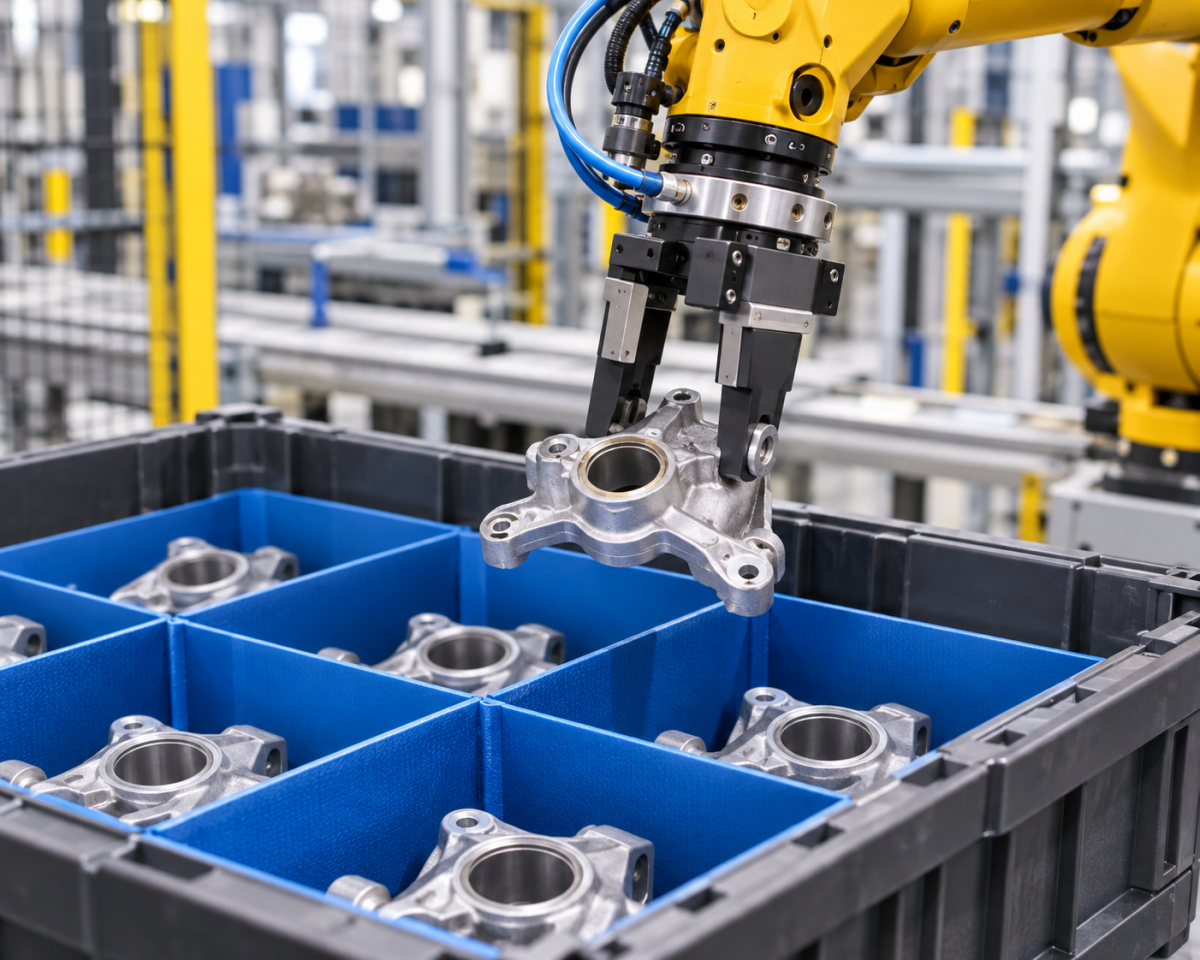
Manufacturing is becoming increasingly automated. From robotic arms and automated assembly lines to conveyor systems and advanced material handling equipment, manufacturers are finding new ways to improve efficiency, consistency, and productivity.
But as automation becomes a bigger part of manufacturing operations, one important detail cannot be overlooked: packaging.
When parts are handled by robots rather than people, packaging needs to do more than simply protect products during transportation. It must also support consistent part positioning, reliable access, and repeatable handling. This is where properly engineered returnable packaging and custom dunnage make a difference.
Why Packaging Design Matters in Automated Manufacturing
Robotic automation depends on consistency. A robot needs to interact with a part predictably, whether it is picking up a component, moving it to another location, or placing it into an assembly.
If a part shifts, rotates, or sits differently each time it is presented, the automated process can become more complicated. Inconsistent positioning can create picking challenges, require extra adjustments, or cause unnecessary interruptions.
Packaging plays an important role in preventing these issues.
A well-designed returnable packaging system helps keep parts organized, properly positioned, and accessible throughout the manufacturing process. Instead of treating packaging as an afterthought, manufacturers should consider it a key part of their overall automation strategy.
The Role of Custom Dunnage in Robotic Applications
Custom dunnage is one of the most important components of an automation-ready packaging solution.
Dunnage is the internal structure of a package that holds, separates, and protects individual parts. Depending on the application, it may include corrugated plastic dividers, foam inserts, molded components, protective pads, or a combination of materials.
When designing dunnage for robotic applications, several factors should be considered:
1. Consistent Part Positioning
Robotic systems work best when parts are presented in predictable locations and orientations. Custom-designed dividers and individual part compartments help establish consistent positioning, reducing unnecessary movement inside the container.
2. Reliable Part Accessibility
The robot needs enough clearance to access and retrieve each component. Dunnage must be designed around the part's shape, the intended pickup location, and the type of gripping or handling equipment being used.
3. Proper Part Orientation
Some components can only be handled or assembled in a specific orientation. Custom dunnage can help maintain that orientation throughout transportation and material handling, making it easier to integrate packaging into automated workflows.
4. Protection Without Interference
Protecting a part is always important, but excessive or poorly positioned packaging materials can interfere with automated handling. Dunnage needs to provide the necessary protection while allowing the robot to access the component without obstruction.
5. Repeatability Throughout the Process
A returnable packaging system may travel between multiple facilities, production areas, or manufacturing processes. Its internal design should consistently hold and present parts throughout repeated handling and transportation cycles.
6. Compatibility With the Entire Manufacturing Process
Packaging doesn't always serve just one purpose. A container may be loaded at one facility, transported to another, unloaded by a robot, and then handled by an operator further down the production line.
The design needs to consider all of these interactions rather than focusing on a single step.
Designing Packaging Around the Part and the Process
One of the biggest mistakes manufacturers can make is designing packaging based solely on the dimensions of the part.
While part dimensions are important, they are only one piece of the puzzle.
When developing a custom returnable packaging solution for an automated application, it is important to understand how the part will be handled from beginning to end.
Some of the questions that should be considered include:
-
Will the part be picked up by a robotic arm, vacuum gripper, or mechanical gripper?
-
Where does the robot need to access the part?
-
Does the component need to maintain a specific orientation?
-
Will machine vision or sensors be used to locate the part?
-
Does the packaging need to interface with conveyors or automated material handling equipment?
-
Will operators also need to access the parts manually?
-
What level of protection is required during transportation and storage?
Understanding these requirements early in the design process helps ensure the packaging solution supports the entire operation.
Collaboration between packaging designers, manufacturing engineers, and automation specialists is especially valuable when developing these solutions.
Why Returnable Packaging Makes Sense for Automated Operations
Returnable packaging offers benefits that extend beyond product protection.
In automated manufacturing environments, packaging is often used repeatedly throughout a production cycle. Having a durable, consistently designed container and dunnage system can help support standardized handling and material flow.
Additional benefits include:
-
Improved organization: Individual compartments keep components separated and organized.
-
Consistent handling: Repeatable packaging designs help establish predictable part presentation.
-
Reduced packaging waste: Reusable containers and dunnage eliminate the need for many single-use packaging materials.
-
Long-term durability: Properly designed returnable packaging is built to withstand repeated use.
-
Better process integration: Custom packaging can be developed around specific manufacturing and material handling requirements.
When packaging is designed correctly, it becomes another tool manufacturers can use to support their operational goals.
Custom Packaging Solutions for the Future of Manufacturing
As manufacturing evolves, packaging needs to evolve with it.
At Amatech Inc., we specialize in designing and manufacturing custom returnable packaging solutions that meet the specific needs of our customers. We understand that no two parts or manufacturing applications are exactly alike, so we focus on customized solutions rather than one-size-fits-all packaging.
From corrugated plastic dividers and custom foam dunnage to complete returnable packaging systems, we work with customers to develop packaging that protects their products and supports their manufacturing processes.
Whether your operation relies on manual handling, robotic automation, or a combination of both, having the right packaging design can make a meaningful difference.
Your packaging should work as hard as your production line.
If you're developing a new automated manufacturing process or looking to improve an existing packaging system, Amatech can help you explore a custom solution.
Contact Amatech Inc. to discuss your next returnable packaging or custom dunnage project.